Originally shared on Instagram
@kopi_with_nina
On presence over quantity, and why you are doing better than you think.
Let’s have a real conversation — the kind we’d have over a warm cup of kopi. As a mother of three — a 21-year-old son, a 17-year-old, and an 11-year-old daughter — I have spent too many precious hours in the shadow of one specific, draining emotion: mum guilt.
The guilt of not carving out enough time. The guilt of losing my temper. The guilt of feeling stretched thin, my attention pulled in a dozen different directions at once. If you have ever felt this way, please know you are not alone. And more importantly, know that the problem isn’t you — it’s a pervasive myth we need to dismantle.
We’ve been sold a lie that the clock is the measure of our love.
We have been told that more hours equals better parenting. But what does the research — and my own experience as a therapist and a mother — tell us? It screams one thing: presence will always outweigh presents. Quality will always trump quantity.
That pressure to be everything, everywhere, all at once for your child? You can let it go. Science shows that a child’s emotional security and wellbeing are built on predictable, responsive connection — not constant physical presence.
The Harvard Centre on the Developing Child puts it plainly: the most important environmental factor in a child’s healthy development is a reliable, responsive, and supportive relationship with a parent. Not the most present parent. The most connected one.
Our children’s sense of security isn’t built on 24/7 physical proximity. It is built in small, consistent moments of true connection. It is the reliability of our attention, not its duration.
Think of it this way:
A whole afternoon together while you are distracted by your phone? That is co-existing.
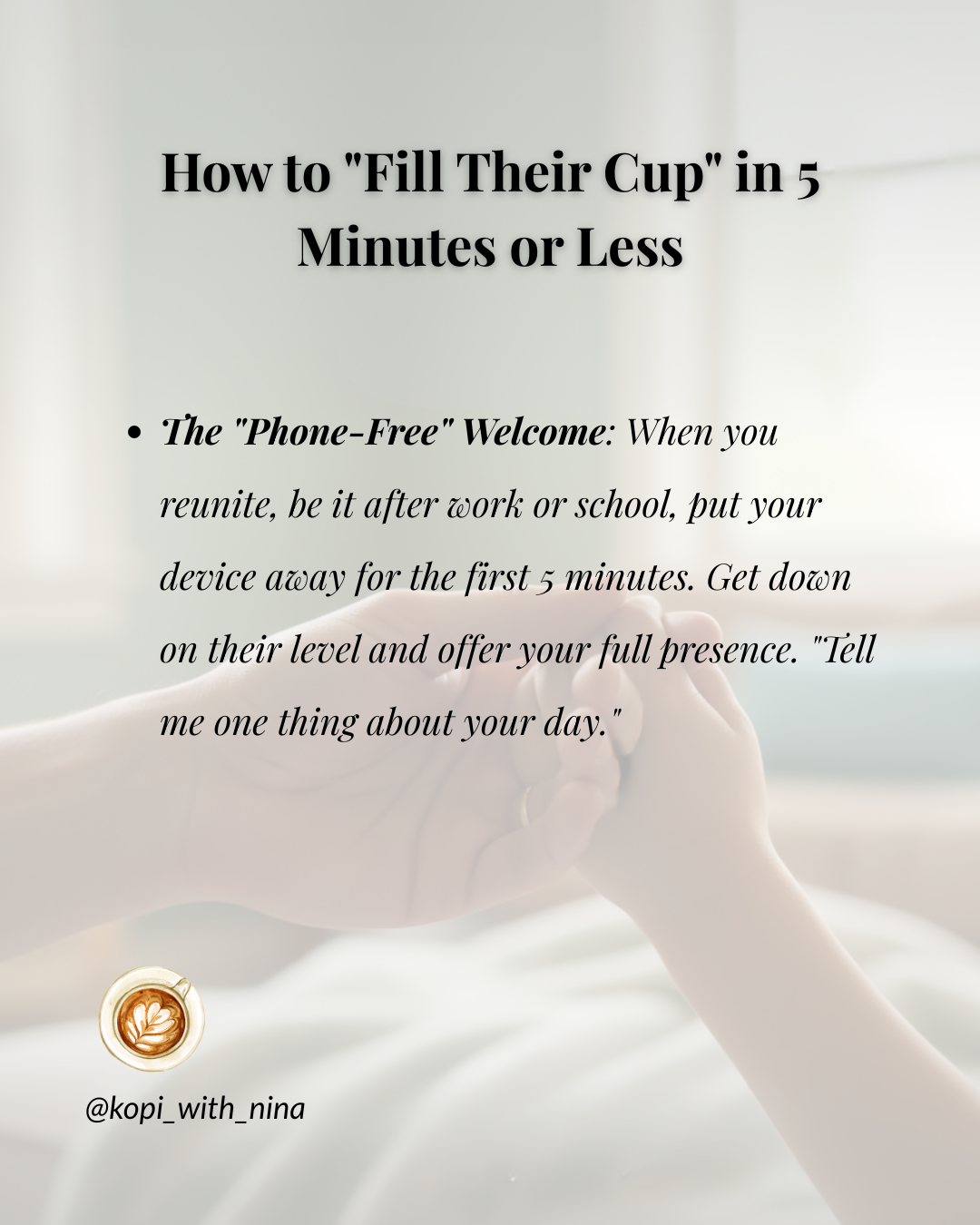
Five fully present minutes when you get home from work — on your knees, looking them in the eye, asking about their day? That is love they can feel.
This isn’t about adding another item to your to-do list. It is about a subtle shift in how you see the moments you already have.
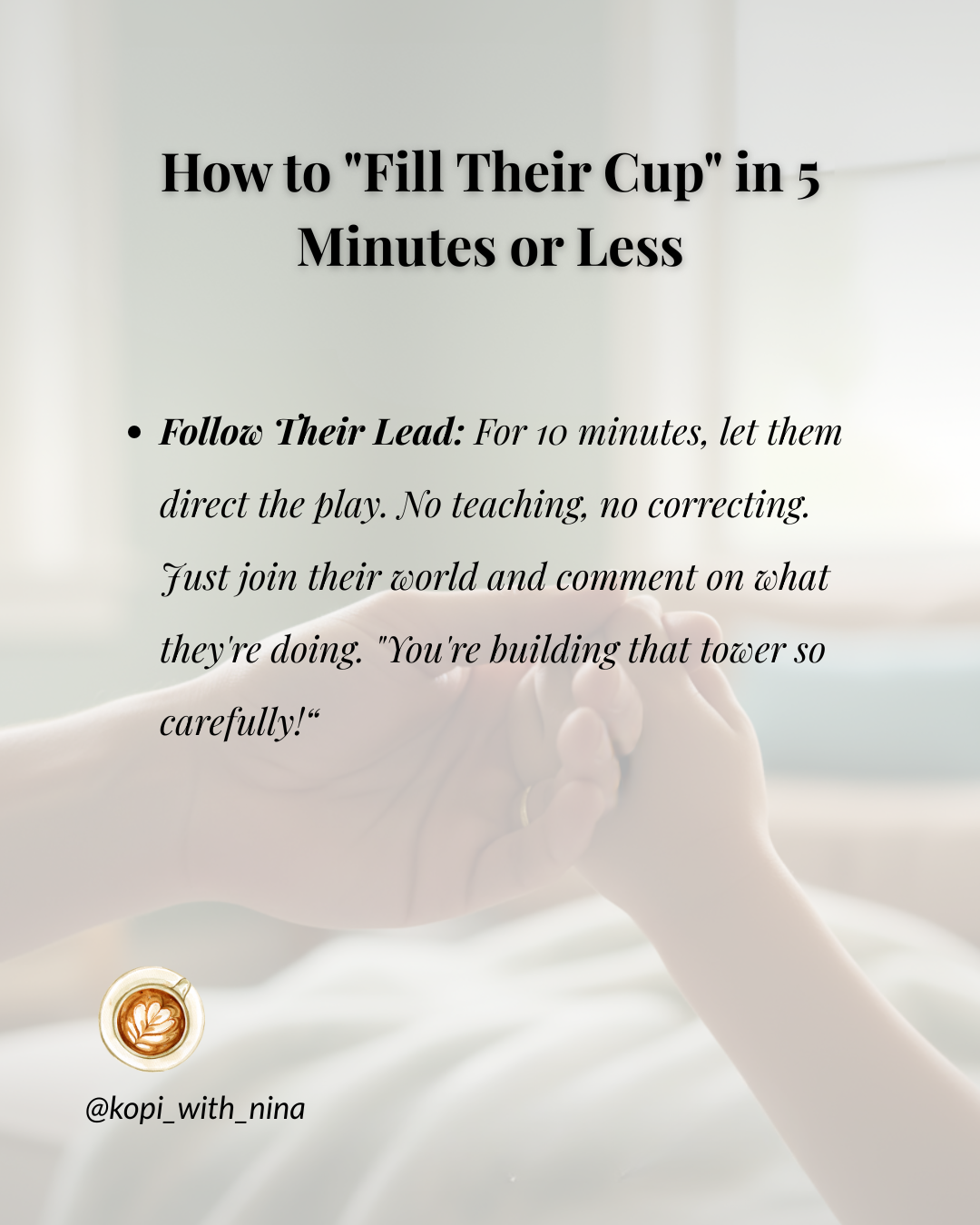
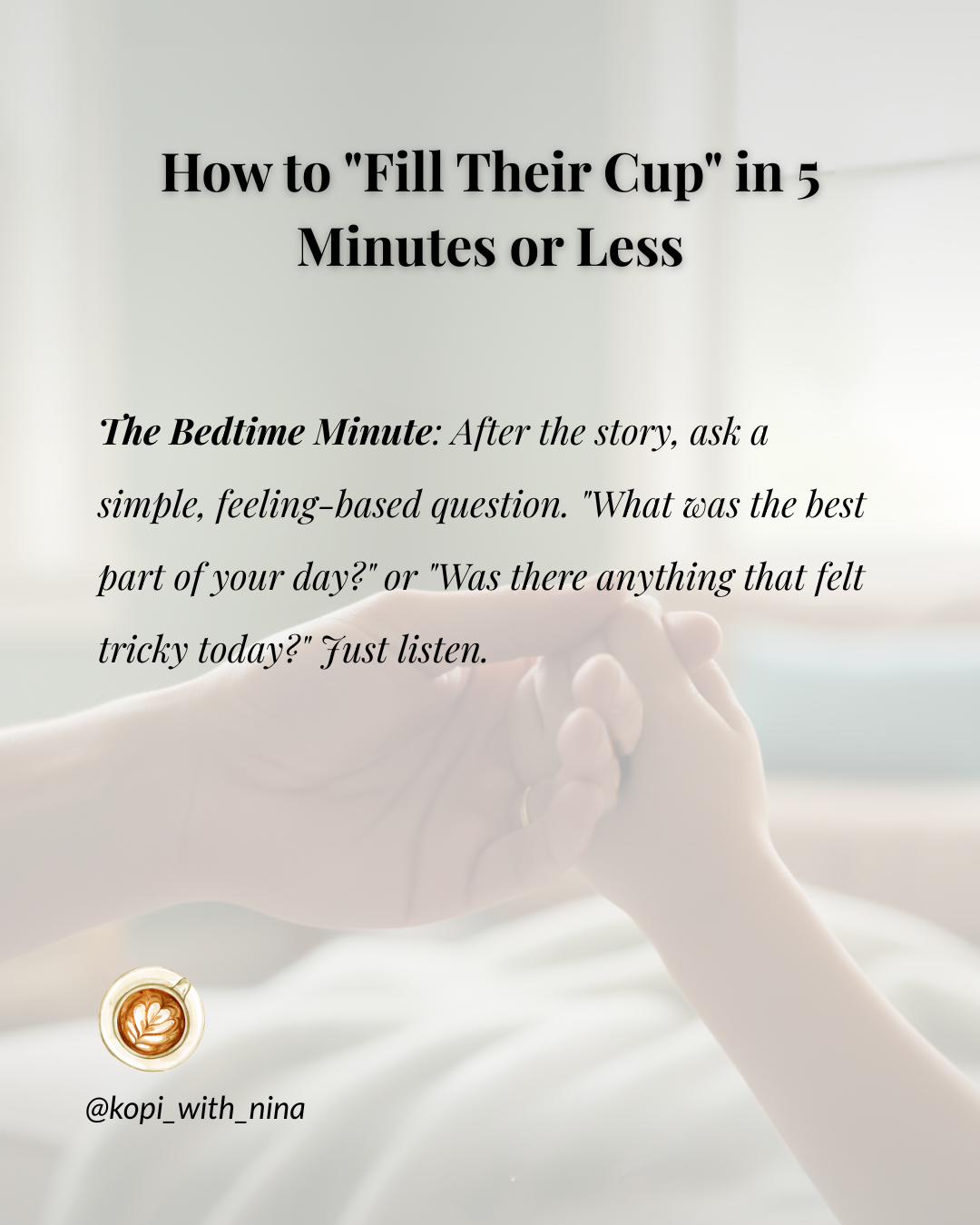
You don’t need a whole afternoon at the zoo. Secure attachment is built in tiny, powerful moments of true connection. Here are three I return to again and again, with clients and with my own children:
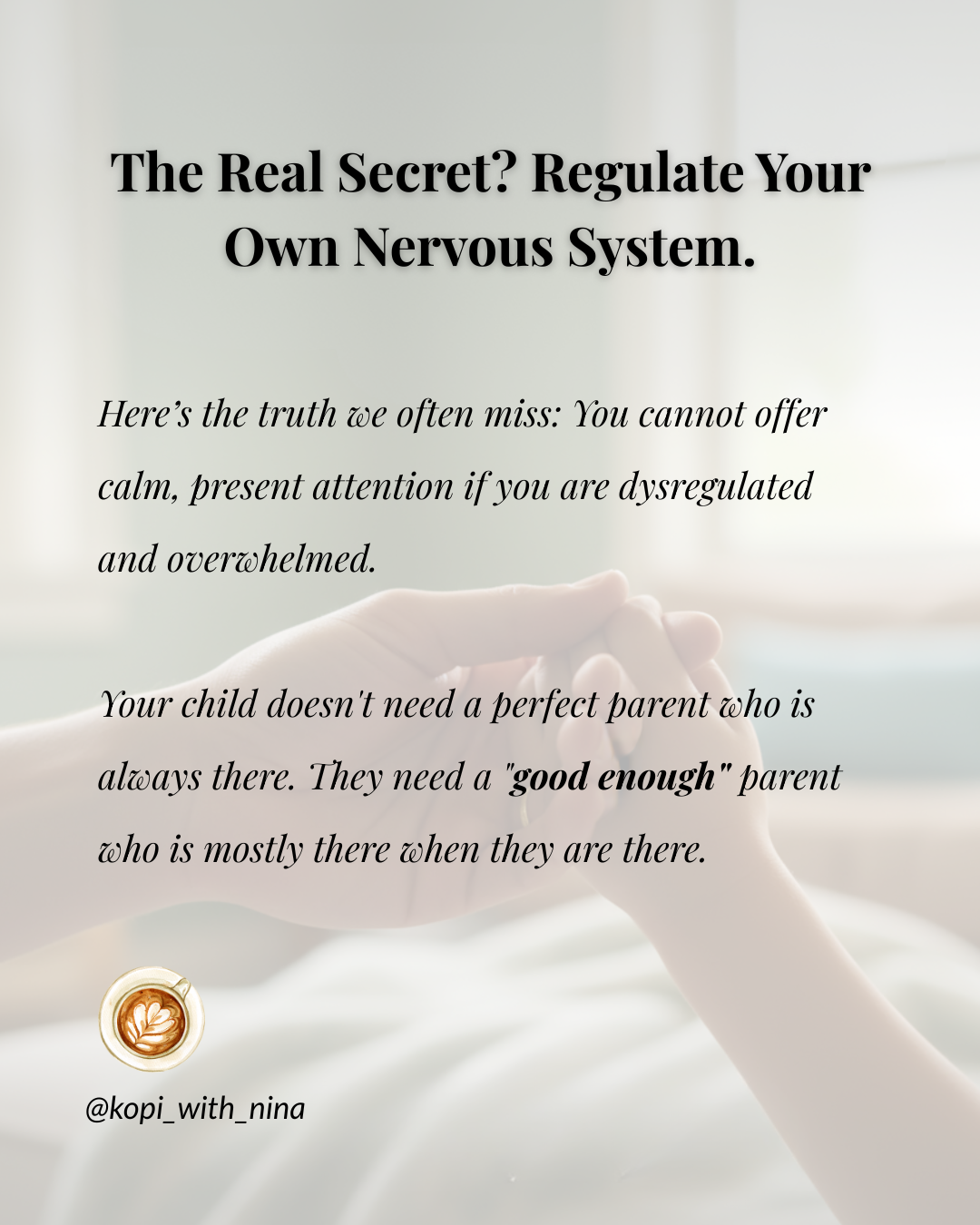
Here is the truth we often miss: you cannot offer calm, present attention if you are dysregulated and overwhelmed. You cannot pour from an empty cup.
Your child doesn’t need a perfect parent who is always there. They need a “good enough” parent who is mostly there when they are there.
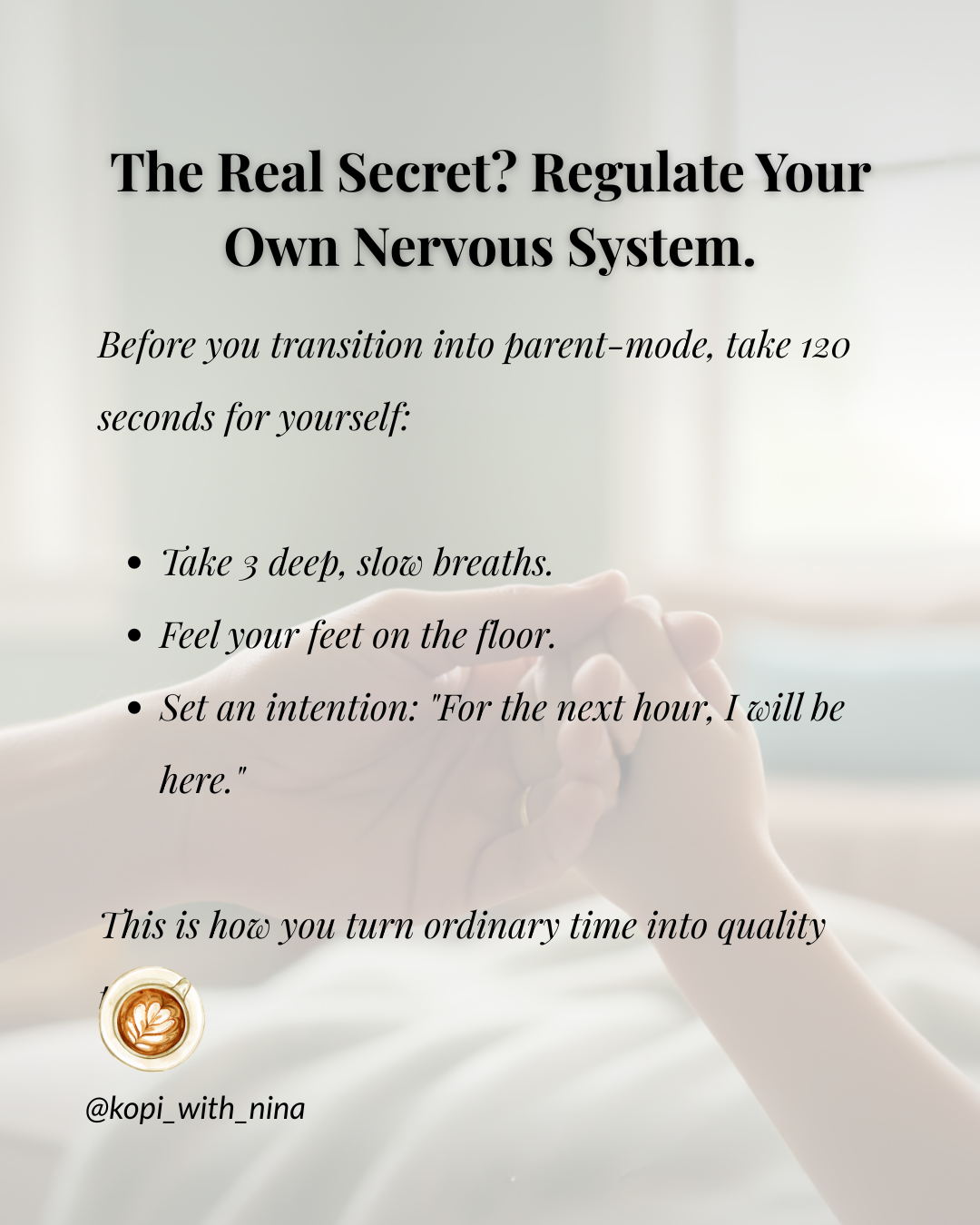
Before you transition into parent-mode, gift yourself 120 seconds. Take three deep, slow breaths. Feel your feet on the floor. Set a simple intention: “For the next hour, I will be here.”
This small act is how you turn ordinary time into quality time. It is how you become the parent your child truly needs — not a perfect one, but a present one.
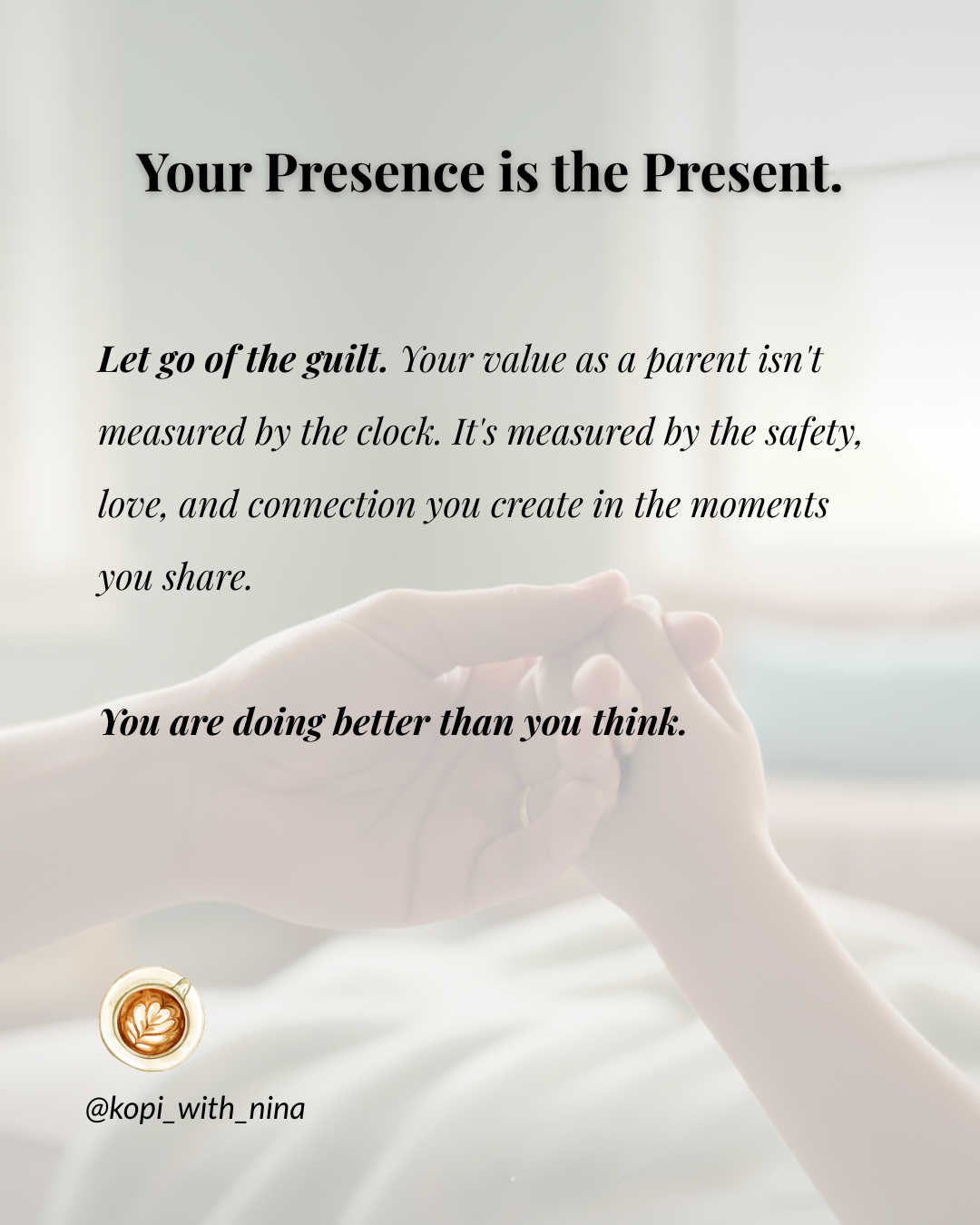
Let go of the guilt. Your value as a parent isn’t measured by the clock. It is measured by the safety, love, and connection you create in the moments you share.
If you are raising a child who knows, deep in their bones, that they are loved — that you are their safe harbour, the person who will fight for them and run to them — then you are doing a magnificent job.
You are doing better than you think.
Keep that in mind, always.
A question to sit with:
Where can you find one of those five-minute moments today?
Research referenced:
Harvard Centre on the Developing Child. (2004). Young children develop in an environment of relationships. Working Paper No. 1. developingchild.harvard.edu
— Nina
Psychotherapist · Workplace Wellbeing Consultant · Kopi with Nina
Originally shared on Instagram
@kopi_with_nina
Notes over coffee
If this resonated, you can have more of it in your inbox.
A monthly letter from Nina — reflections on relationships, work, grief, and the quieter parts of being human. No marketing. Just writing.
No spam, ever. Unsubscribe any time.
Kopi with Nina